AI Agents vs. AI Workers: What's the Difference?
"AI agent" and "AI worker" are often used interchangeably — but they describe two very different ways of putting artificial intelligence to work in your business. The distinction matters, because it determines how much you can trust the technology, how much oversight you need, and how much real work actually gets done.
This guide breaks down what each term means, where they overlap, and how to choose the right approach for your team.
What is an AI agent?
An AI agent is a software program that uses a large language model (LLM) to pursue a goal with some degree of autonomy. Give it an objective — "research our top five competitors" or "draft a reply to this email" — and it reasons through the steps, calls tools or APIs, and produces a result.
Agents are powerful because they're flexible. They can chain actions together, react to new information, and operate without a fixed script. But that flexibility is also their weakness:
- They're unpredictable. The same prompt can produce different results, and an agent can "decide" to take an action you never intended.
- They lack accountability. When an autonomous agent sends the wrong email or updates the wrong record, there's often no clear approval trail explaining why.
- They're hard to manage at scale. Running ten agents is very different from running ten you can actually supervise, audit, and trust.
For experiments and low-risk tasks, raw agents are great. For running real business operations, most teams quickly hit a wall.
What is an AI worker?
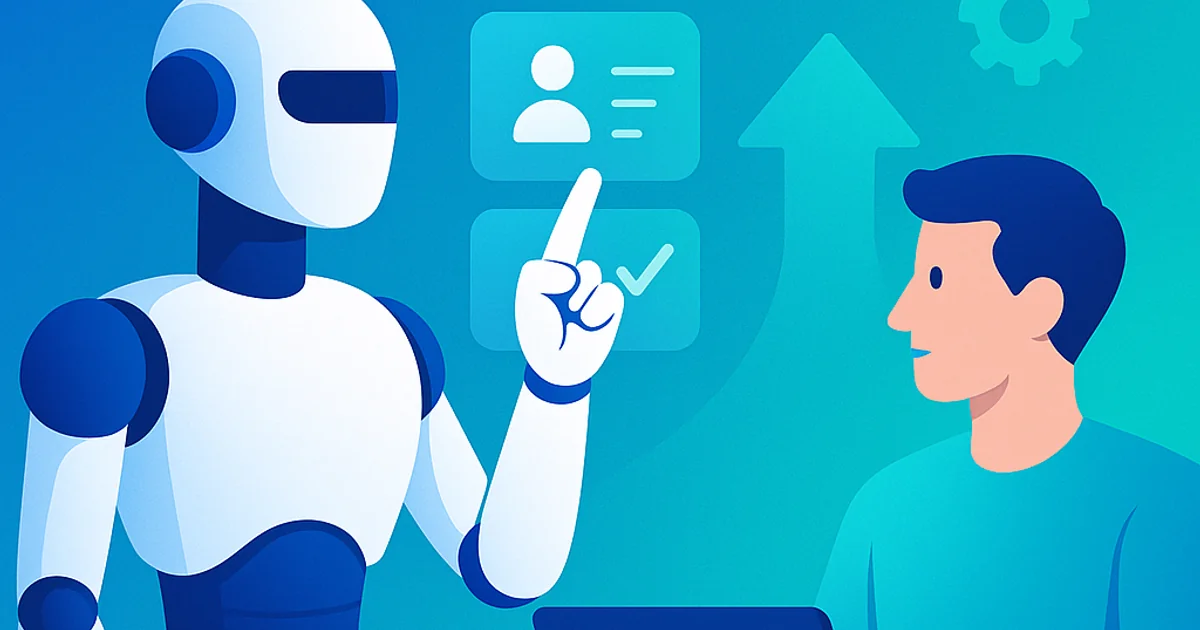
An AI worker takes the underlying capability of an agent — reasoning, tool use, autonomy — and wraps it in the structure of an actual employee. Instead of a free-floating bot, you get a configurable team member with:
- A defined role (developer, analyst, support rep, marketer) and a clear scope of responsibility.
- Permissions and guardrails that control exactly which tools and actions it can use.
- An autonomy level you set — from draft-only, to "propose and wait for approval," to fully automatic for trusted tasks.
- A complete audit log of everything it proposed, what was approved, and what it executed.
In other words, an AI worker is an AI agent with a job description, a manager, and a paper trail. The intelligence is the same; the governance is what changes.
The key differences
Rather than comparing them feature by feature, it helps to think about what each is optimized for:
- Goal. An agent is optimized to complete a task autonomously. A worker is optimized to do a job reliably, with oversight.
- Oversight. Agents have minimal oversight by default. Workers have approval workflows built in.
- Accountability. Agents rarely leave a usable audit trail. Workers log every proposal, approval, and execution.
- Scope. Agents are open-ended. Workers are role-based and permissioned.
- Best fit. Agents shine in prototypes and low-risk tasks. Workers are made for production business operations.
Why human-in-the-loop is the bridge
The most important difference between an agent and a worker is human-in-the-loop control.
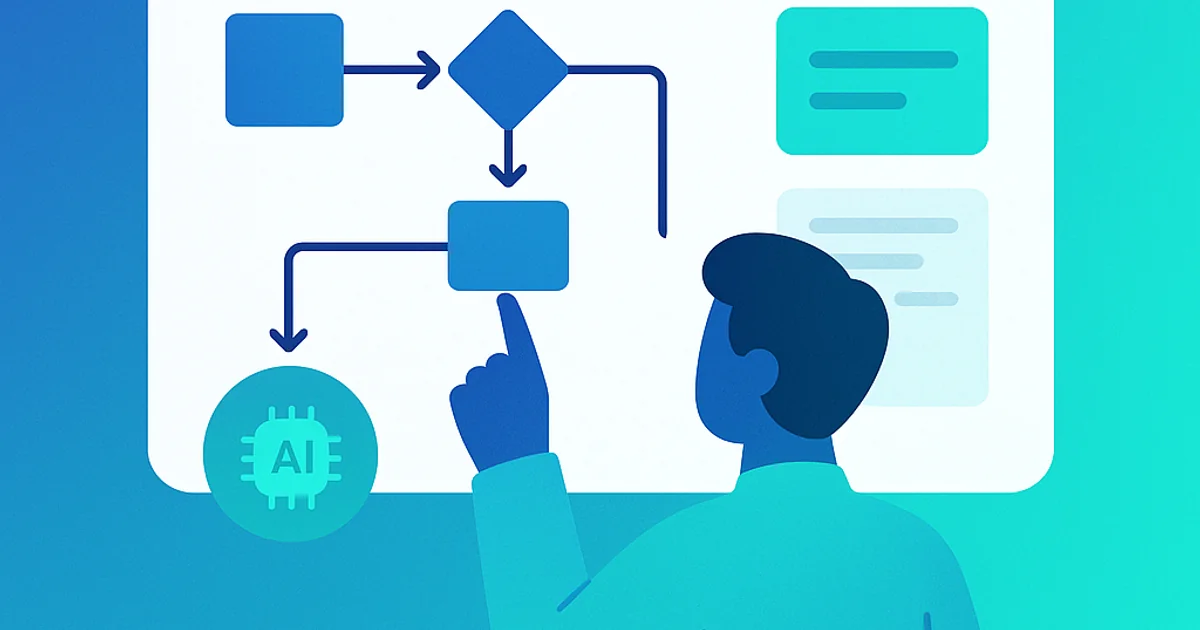
A pure agent acts first and asks questions never. An AI worker can be configured to propose an action and wait for a human to approve, edit, or reject it before anything happens. That single design choice transforms AI from a fascinating-but-risky novelty into something you can actually deploy in finance, support, sales, or engineering.
Human-in-the-loop doesn't mean slowing everything down. The best systems let you:
- Auto-approve low-risk, routine actions.
- Require sign-off only for sensitive operations — sending money, publishing content, merging code.
- Gradually increase autonomy as a worker proves itself.
You get the speed of automation without giving up control.
Which does your business need?
Ask yourself three questions:
- What's the cost of a mistake? If a wrong action could cost money, damage a customer relationship, or break production, you need the oversight of an AI worker — not a free-running agent.
- Do you need an audit trail? Regulated industries, finance teams, and anyone with compliance requirements need to show who approved what. Agents rarely provide this; workers do.
- Are you scaling beyond one task? Running a whole team of AI requires roles, permissions, and delegation — the structure that workers provide and raw agents don't.
If you're building a quick prototype, an agent is fine. If you're automating real operations your business depends on, you need AI workers.
The bottom line
AI agents and AI workers are built on the same underlying intelligence, but they solve different problems. An agent is raw capability. An AI worker is that capability made manageable, accountable, and safe to deploy — through defined roles, granular permissions, and human approval where it matters.
CreateWorker is built around exactly this idea: hire AI workers, assign them roles, set their autonomy level, and keep a human in the loop for the decisions that count. It's the difference between hoping AI does the right thing and knowing it will.
Ready to build your AI team? Explore the product or see how it works.